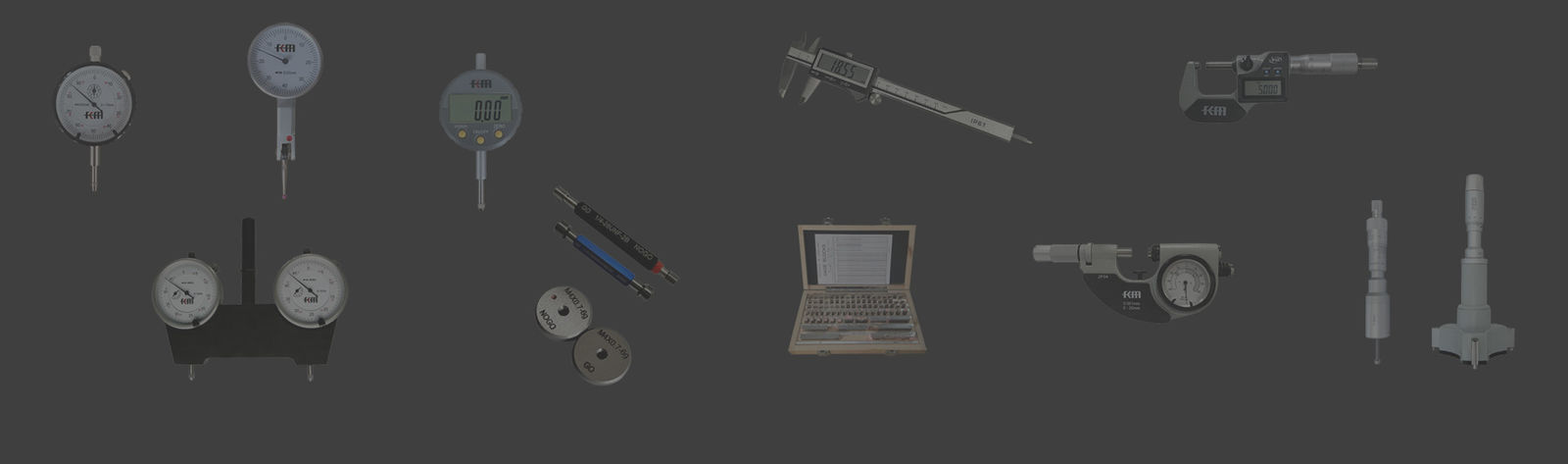
The accuracy grade of a gauge block is a key index of its actual size accuracy, dimensional variation, and measurement performance. As a material measure in length metrology, gauge blocks are mainly used for size dissemination, instrument calibration, precision measurement, and workshop inspection. Their accuracy grading is not based solely on nominal size, but is evaluated comprehensively in terms of manufacturing accuracy, length deviation, length variation, and measurement uncertainty. In practice, the grade should be matched to the specific metrological task, so as to avoid assigning high-accuracy grades to ordinary inspection or using low-accuracy blocks for high-precision calibration.

I. How Are Gauge Block Accuracy Grades Classified?
Gauge block accuracy grades are typically classified based on technical specifications such as length deviation and length variation. Different countries and regions may use varying grading systems. In China, commonly used gauge block grades in practical metrology work include Grade 0, Grade 1, Grade 2, and Grade 3, although some metrological systems may employ other classification methods. Specific grade definitions and permissible deviations should be based on current national standards and gauge block verification regulations.
The core of a gauge block's grade is not merely the magnitude of dimensional error, but also includes performance characteristics such as flatness, parallelism, surface mating ability (lapping), and length stability of the working surfaces. Since gauge blocks are combined by lapping to achieve desired dimensions, the quality of surface finish and their mating properties directly affect the accuracy of the assembled dimension.
It is important to distinguish between a gauge block's "accuracy grade" and its "nominal size." For example, two 20 mm gauge blocks of different grades may have different allowable length deviations and may serve different purposes. Generally, higher grades require stricter control over dimensional accuracy during manufacturing and verification processes.
II. Differences Among Various Accuracy Grades of Gauge Blocks
High-precision grade gauge blocks are primarily used for precision length measurement, instrument calibration, and dimensional transfer, requiring strict control over length deviation and length variation. During use, temperature, cleanliness, and measurement methods must be carefully controlled to prevent environmental factors from significantly affecting the actual length of the gauge blocks.
Grade 1 gauge blocks are typically suitable for high-precision inspection and metrology tasks, such as calibrating precision measuring instruments, comparing precise dimensions, and laboratory length measurements. The specific application range should be determined based on the block's size, verification status, and actual measurement requirements.
Grade 2 gauge blocks are widely used in mechanical manufacturing enterprises and on-site metrology applications. They are suitable for general precision measurements, instrument inspection, fixture adjustment, and comparison of machining dimensions. In typical mechanical processing environments where extremely high-precision dimensional transfer is not required, Grade 2 gauge blocks usually meet standard operational needs.
Grade 3 gauge blocks are mainly used for routine dimensional inspection and process adjustments with relatively modest accuracy requirements. When using these blocks, it is essential to assess whether they meet the required standards by considering the accuracy class of the instrument being calibrated and the allowable measurement error. It is incorrect to assume that a gauge block can be used for a given calibration task simply because it can be combined to achieve the target dimension.
III. Relationship between Gauge Block Accuracy Grade and Length Deviation
The nominal length of a gauge block does not necessarily match its actual length exactly. During manufacturing and inspection, the actual center length of the gauge block is measured and compared with the specified reference length to determine whether the length deviation falls within the allowable range for the corresponding grade.
Length deviation refers to the difference between the actual length of the gauge block and its specified length. For precision gauge blocks, this difference is typically very small, so ordinary vernier calipers or micrometers cannot be relied upon alone for evaluation; instead, appropriate high-precision length measurement equipment must be used for comparison or calibration.
Gauge blocks also exhibit length variation. Even if the average length meets requirements, significant differences in length at various measurement positions can affect the reliability of the gauge block when used as a length standard or in combination with other measuring tools. Therefore, accuracy grade evaluation must consider both length deviation and length variation.
Here are some questions and answers you might be interested in:
Q: What are the common levels of gauge block accuracy?
A: In actual use in China, common levels include zero grade, first grade, second grade, third grade, and so on. Different grades correspond to different technical requirements such as length deviation and length variation. The specific allowable deviations should be checked according to current national standards and metrological verification regulations. They cannot be directly applied with fixed values without referring to the standards.
Q: Is a higher gauge block grade suitable for all measurements?
A: No. The grade of the gauge block needs to be matched with the measurement task, the accuracy of the inspected gauge, and the tolerance of the workpiece. Using higher-grade gauge blocks for ordinary size detection may increase costs, while insufficient grades may not meet the measurement requirements.
Q: Can gauge blocks be handled by hand?
A: In ordinary use, it is best to avoid prolonged contact with the working surface and measurement surface of the gauge block with bare hands. Human body heat, sweat, and oils may affect the temperature and surface condition of the gauge block. During precise measurement, appropriate operation tools should be used and the gauge block should be kept clean.
Q: Why can gauge blocks be used in combination?
A: The working surfaces of gauge blocks have been precisely ground to have good flatness, parallelism, and mating properties. Cleaning the working and measurement surfaces and following the specifications for mating can form the required size with multiple gauge blocks, which can be used for length comparison, size adjustment, and gauge calibration.
Q: Do gauge blocks need to be regularly verified?
A: The verification or calibration cycle of gauge blocks should be determined based on their usage, frequency of use, storage conditions, and relevant metrological management requirements. Gauge blocks that are frequently used or undertake important measurement value transmission tasks should have their states strengthened and be verified or calibrated in a timely manner upon discovering wear, rust, or abnormalities.
The gauge block accuracy grades are mainly used to reflect the length accuracy and related technical performance of the gauge block itself. Different grades correspond to different usage requirements. When selecting a gauge block, it should be judged comprehensively based on the length deviation, length variation, working surface condition, mating performance, material characteristics, and measurement environment. The requirements for gauge block grades are different in mechanical processing sites, gauge inspection, and metrological laboratories. Choosing the appropriate grade according to current national standards and metrological verification regulations can enable the gauge block to truly play the role of length value transmission and precise measurement.